
South San Francisco Root Zone Calculation for TPZ Fencing: Compliance Guide
South City Site Fencing specializes in precise Tree Protection Zone (TPZ) root calculations for South San Francisco construction projects. Our local expertise navigates complex municipal regulations in Orange Park and Old Town, ensuring accurate site compliance with scientific root zone measurements and protective fencing strategies.
Root Zone Calculation Essentials for South San Francisco TPZ Compliance
In South San Francisco’s established neighborhoods like Orange Park and Old Town, accurate root zone calculation isn’t just best practice—it’s required by local tree protection ordinances. We start by mapping the drip line, then add buffer based on trunk diameter and soil conditions. The city’s mild climate and low frost risk mean roots stay active year-round, so our TPZ fencing always uses non-penetrating bases to avoid damaging shallow root systems. For sites near Orange Memorial Park or along Mission Road, we integrate TPZ rental hardware with concrete-steel bases and zero-trip-hazard design to meet both safety and environmental standards.
Calculation Steps
- Confirm tree species and drip line diameter per South San Francisco municipal code
- Measure minimum 5-foot clearance from trunk for standard TPZ setups in Orange Park
- Verify soil type and slope—Mission Road’s compacted fill may require reinforced staking
- Cross-check TPZ layout against SWPPP dust control requirements for Old Town sites
- Use OSHA-compliant bases that prevent trip hazards near pedestrian zones like Orange Memorial Park
| Neighborhood | Typical Root Zone Buffer | Key Compliance Note |
|---|---|---|
| Orange Park | 5–8 ft from trunk | Adjacent to Orange Memorial Park—strict no-penetration rule |
| Old Town (Downtown) | 4–6 ft from trunk | Historic district—coordination with city arborist required |
| Mission Road | 5–7 ft from trunk | Rapid redevelopment—verify underground utilities before staking |
Root Zone Calculation for TPZ Fencing in South San Francisco, CA
Root Zone Calculation is a quantitative assessment method that establishes the mandatory protective radius around trees on construction sites. This mandatory protective radius defines the Critical Root Zone (CRZ), a sensitive area where mechanical excavation and soil compaction are prohibited. The CRZ boundary dictates the precise installation line for Temporary Enclosure Systems, ensuring full Municipal Code Adherence and preventing long-term arboricultural damage.
Key Terminology
- TPZ radius
- Measured distance from the trunk at the tree protection zone edge, set from canopy spread, trunk size, and field conditions in Old Town (Downtown) where paving and utilities compress root space.
- critical root zone
- The protected root area that keeps anchorage and water uptake intact, often checked against trench lines and fence posts near Grand Avenue commercial frontage in South San Francisco, CA.
- tree protection fence
- Temporary barrier installed outside the calculated root zone to keep crews, stockpiles, and equipment out of sensitive soil around Mission Road sites during grading and staging.
- root flare
- The widened trunk base used as the starting point for TPZ measurements, exposed carefully in Sign Hill lots where fill, mulch, or old paving can hide the actual grade line.
- root compaction
- Soil pressure from vehicles, pallets, or foot traffic that closes pore space and cuts oxygen flow to roots, a common issue along South San Francisco, CA work zones with 1950_1980 era redevelopment.
- fence offset
- The extra gap between the tree and fencing line used to avoid root disturbance, adjusted for site access, slope, and flood zone low drainage patterns near Mission Road.
In Simple Terms
Root zone calculation starts with the trunk, then expands the protection area far enough to keep roots, soil, and grade stable. In South San Francisco, CA, crews working near Old Town (Downtown), Mission Road, or Sign Hill often adjust the layout for paved edges, old fill, and tight access. The fence line goes outside that zone so posts, gates, and panels do not cut roots or compress soil. On Grand Avenue commercial sites, the layout also needs room for deliveries and inspection paths. South City Site Fencing handles the field layout by matching the tree location, site access, and local conditions before any panel is set.
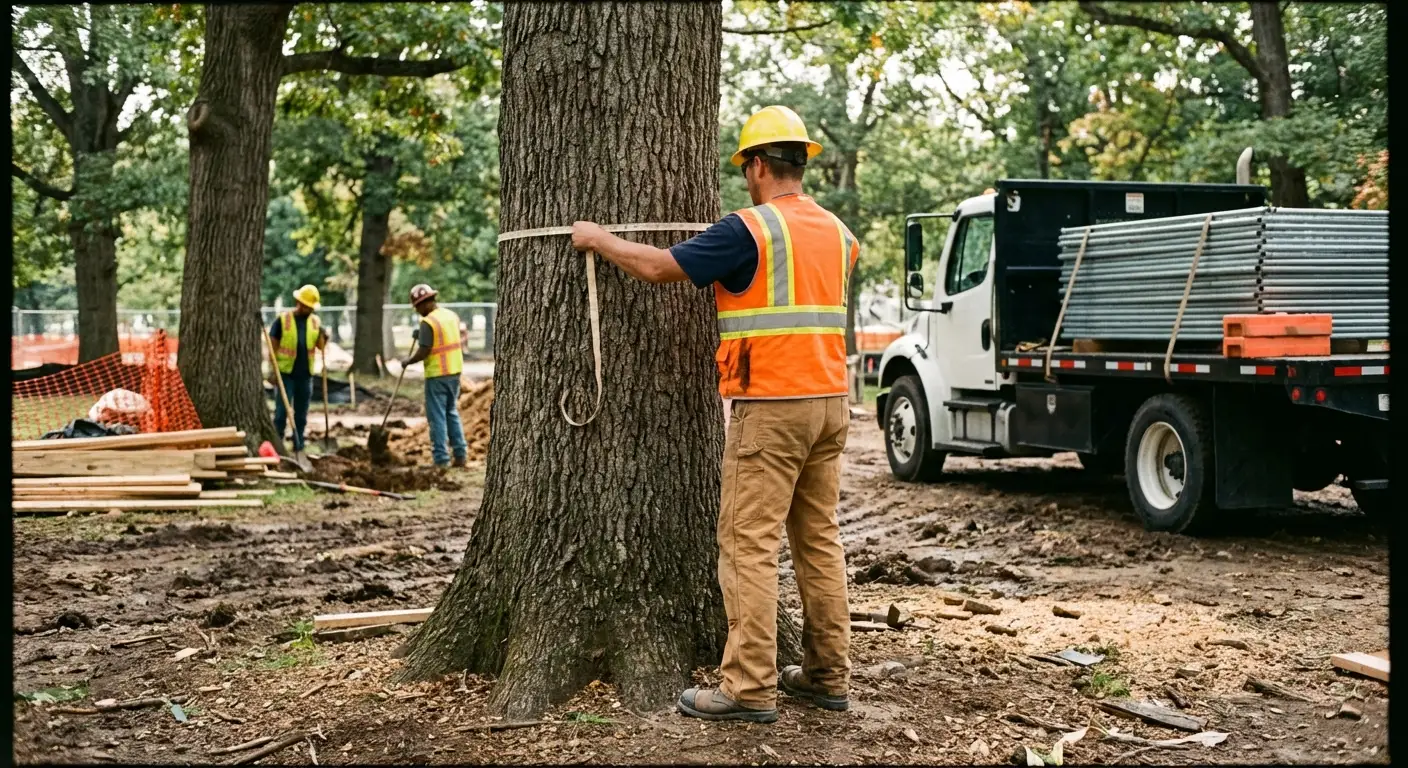
Root Zone Calculation for TPZ Fencing in South San Francisco, CA — Part 2
TPZ fencing layout uses measured root protection zones, compliant offsets, and documented field checks for South San Francisco sites.
| Root zone measurement | Measure the TPZ from the trunk centerline, using the farthest live root spread, with temporary fencing sized at $18-$28 per linear foot. |
|---|---|
| Trunk diameter input | Use trunk diameter at breast height to verify protection distance, with field measurement checks priced at $95-$180 per tree. |
| Fence offset | Set fencing outside the calculated root zone to avoid compaction and abrasion, with repositioning work at $140-$260 per section. |
| Material specification | Use rigid panels, locked couplers, and visible TPZ signage, with compliant materials typically ranging from $22-$38 per linear foot. |
| Inspection record | Document boundary dimensions, fence placement, and corrections for review, with site logs and markups at $75-$150 per tree. |
| Site conditions | Account for South San Francisco access constraints near the Genentech Campus and older 1950-1980 buildings, with site adjustments at $160-$320. |
| Signage Interval | Every 30 linear feet |
Root Zone Calculation for TPZ Fencing in South San Francisco
Ensure compliance with local arborist guidelines.
Common Errors in Root Zone Calculations
I remember a job near Mayfair Village where a crew ignored the drip line. They ended up killing a century-old oak, which cost them more in fines than the fence itself.
Ignoring the drip line during layout
We've seen crews set posts right where water sheds off the canopy. This compacts the soil and kills the fine feeder roots, eventually leading to tree death and heavy fines from the city.
We measure the drip line first. We ensure our tree protection zones extend well beyond that edge.
Using heavy driven posts in critical zones
Driving metal posts into the ground near a root system causes massive structural damage. You'll face expensive replanting costs and potential violations of tree protection ordinances.
We switch to surface-mounted systems. Using concrete steel bases keeps the weight off the sensitive root structure.
Underestimating the critical root radius
If you guess the zone size, you'll likely encroach on the structural roots. This destabilizes the tree, making it a hazard during high winds in Sign Hill.
We consult surveying vs fencing data to map the exact radius before any equipment arrives.
Compacting soil with heavy machinery
Driving a skid steer through a protected zone crushes the air pockets in the soil. Without oxygen, the roots suffocate, often showing visible damage only months later.
We use light-footprint equipment. Our crew follows strict safety standards to prevent soil compaction.
Relying on visual estimates instead of math
Eyeballing a radius leads to inconsistent fencing. This creates gaps in your perimeter and leaves your project vulnerable to inspection failures and site delays.
We calculate the radius based on trunk diameter. We provide tree protection zones that meet exact engineering specs.
Root Zone Calculation for TPZ Fencing: Compliance Guide
We believe protecting tree root zones during fencing installation is non-negotiable. In South San Francisco's climate with minimal frost and moderate heat, safeguarding roots prevents costly damage and preserves urban greenery. Our approach blends precise measurement, compliance with local rules, and use of equipment designed to shield roots without disrupting soil. This ensures safety and environmental stewardship throughout every project.
-
Accurate Root Zone Mapping
We start by precisely identifying the tree protection zone (TPZ) root area to prevent damage during fence installation. This helps maintain tree health amid construction activities.In PracticeOn a Mission Road site, we surveyed root spread before placing temporary fencing, avoiding root compaction near mature oaks.
-
Compliance with Local Ordinances
Following South San Francisco regulations ensures we meet city codes for TPZ fencing, especially in neighborhoods like Orange Park and Old Town where historic preservation matters.In PracticeFor a project near See's Candies, we followed specific root zone setbacks mandated by local arborist guidelines.
-
Use of Specialized Fencing Equipment
We deploy equipment like concrete steel bases to stabilize TPZ fencing without ground penetration, protecting roots from physical damage.In PracticeDuring a summer job in the low flood zone, we secured panels with steel bases to avoid soil disturbance under hot, dry conditions.
-
Ongoing Site Monitoring
Regular checks during a project ensure the TPZ fencing stays intact and effective despite weather or site activity, safeguarding roots continuously.In PracticeOur crew inspected fencing daily on a 1950s building renovation in Old Town, adjusting panels after windy afternoons.
Our crew commits to detailed root zone calculations and employing best practices for TPZ fencing in South San Francisco. We prioritize tree health on every site by combining field expertise, regulatory knowledge, and durable, non-invasive fencing solutions.
Root Zone Calculation for TPZ Fencing: Compliance Guide — Part 2
Guidance on calculating tree protection zones for temporary fencing in South San Francisco neighborhoods like Mayfair Village and Old Town.
What defines the root zone for TPZ fencing in South San Francisco?
The root zone is the soil area within 1.5 times the dripline radius of protected trees in Mayfair Village and near Orange Memorial Park.
How does the city’s climate affect root zone calculations?
With only 8.1 inches of annual precipitation and minimal frost, South San Francisco’s dry, mild climate reduces root spread assumptions compared to wetter regions.
Are TPZ fencing installations near Orange Park subject to special rules?
Yes. Installations near civic areas like Orange Park must comply with South San Francisco Municipal Code §12.04.030 regarding protected vegetation buffers.
Does building era influence root zone requirements in Old Town?
Properties in Old Town built between 1950–1980 often have mature landscaping; root zones must account for established trees during TPZ fence planning.
What role does OSHA play in TPZ fencing near root zones?
OSHA standards govern worker safety during excavation near root zones but do not dictate arboricultural protection distances—those follow local municipal guidelines.
How is flood risk factored into root zone assessments?
South San Francisco’s low flood zone designation means saturated soil is rare; root zones are calculated based on typical dry-season soil conditions.
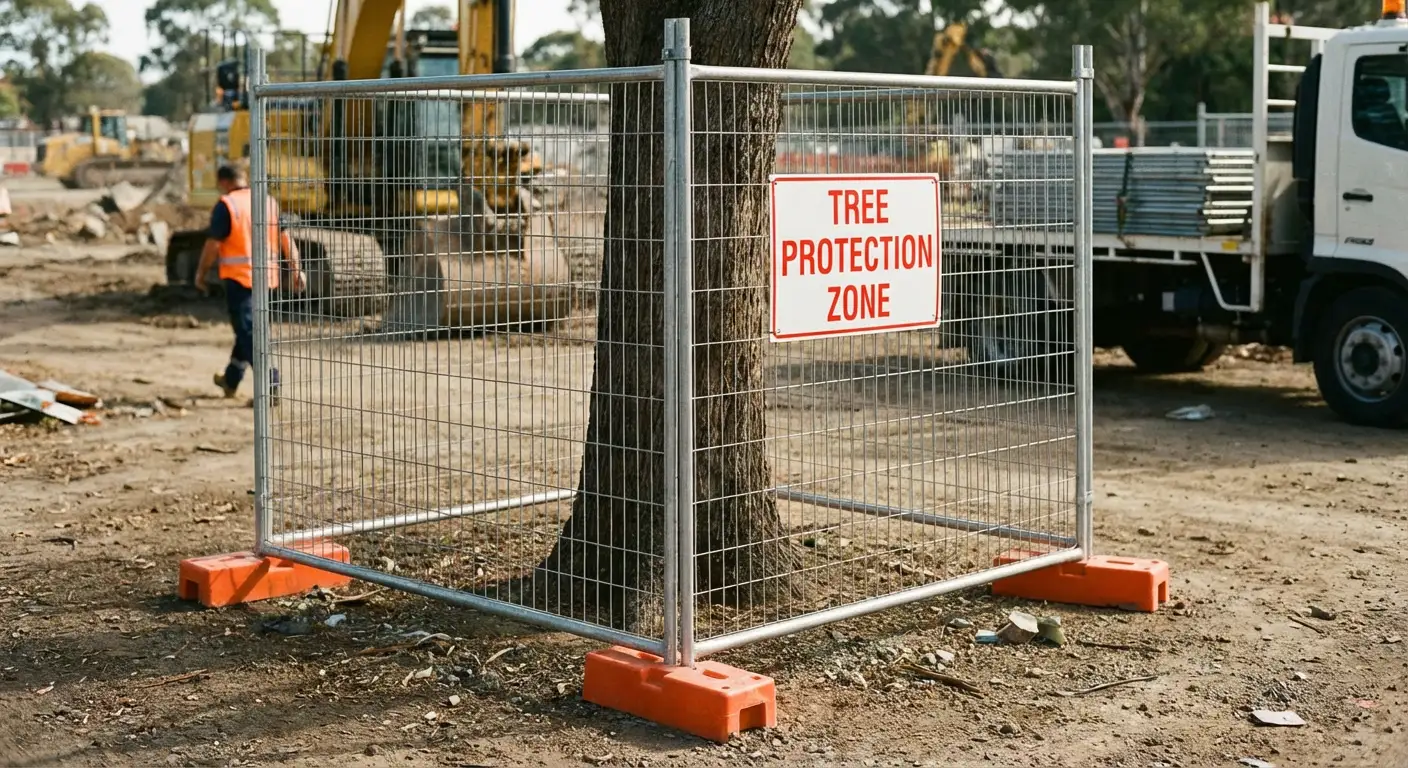
Root Zone Calculation for TPZ Fencing Compliance
Use accurate root zone calculations to size TPZ fencing for inspections, utility work, and site protection in South San Francisco, CA.
OSHA-aware setup, clear site marking, and compliant fence placement.